AI in hotel marketing: more strategy, less operations
Marketing 14/04/2026
Time is the only resource that cannot be recovered. And for too long, hotel marketing has invested it in necessary tasks, yes, but tasks far from generating a true competitive advantage. Switching from account to account. Exporting data. Cross-referencing spreadsheets. Formatting reports. Manually checking alerts... hours spent executing, rather than thinking, deciding, and optimizing.
At Paraty Tech, artificial intelligence has not arrived to replace marketing. It has arrived to give marketers their time back.
One of the most tangible changes at Paraty Tech has to do with something very specific: the time spent working with data.
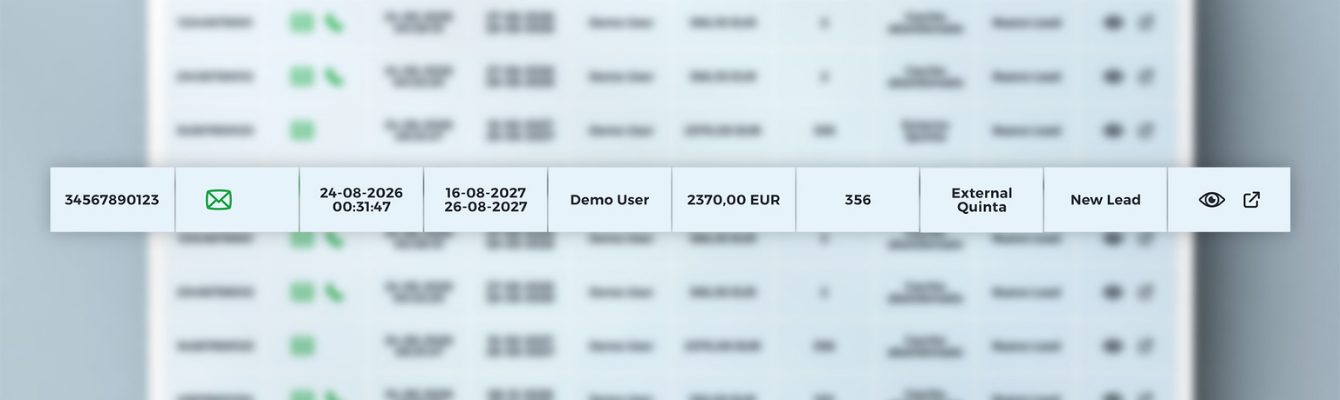
Processes that previously required hours—such as extracting information, structuring it, analyzing it, and presenting it—are now resolved in minutes. The automation of reports, account audits, and early warning systems has allowed for a reduction of nearly 80% in the operational time associated with these tasks.
What was once half a day's work is now resolved in minutes. And when multiplied by the volume of accounts managed by an agency like Paraty Digital Suite, this represents a structural change in the team's operational capacity.
But this is not just about efficiency; it is about decision-making speed.
An account manager who previously spent hours building a monthly report now accesses that same analysis in real-time, with a higher level of detail and personalization. And that recovered time translates directly into what really adds value: strategy, optimization, and decision-making.
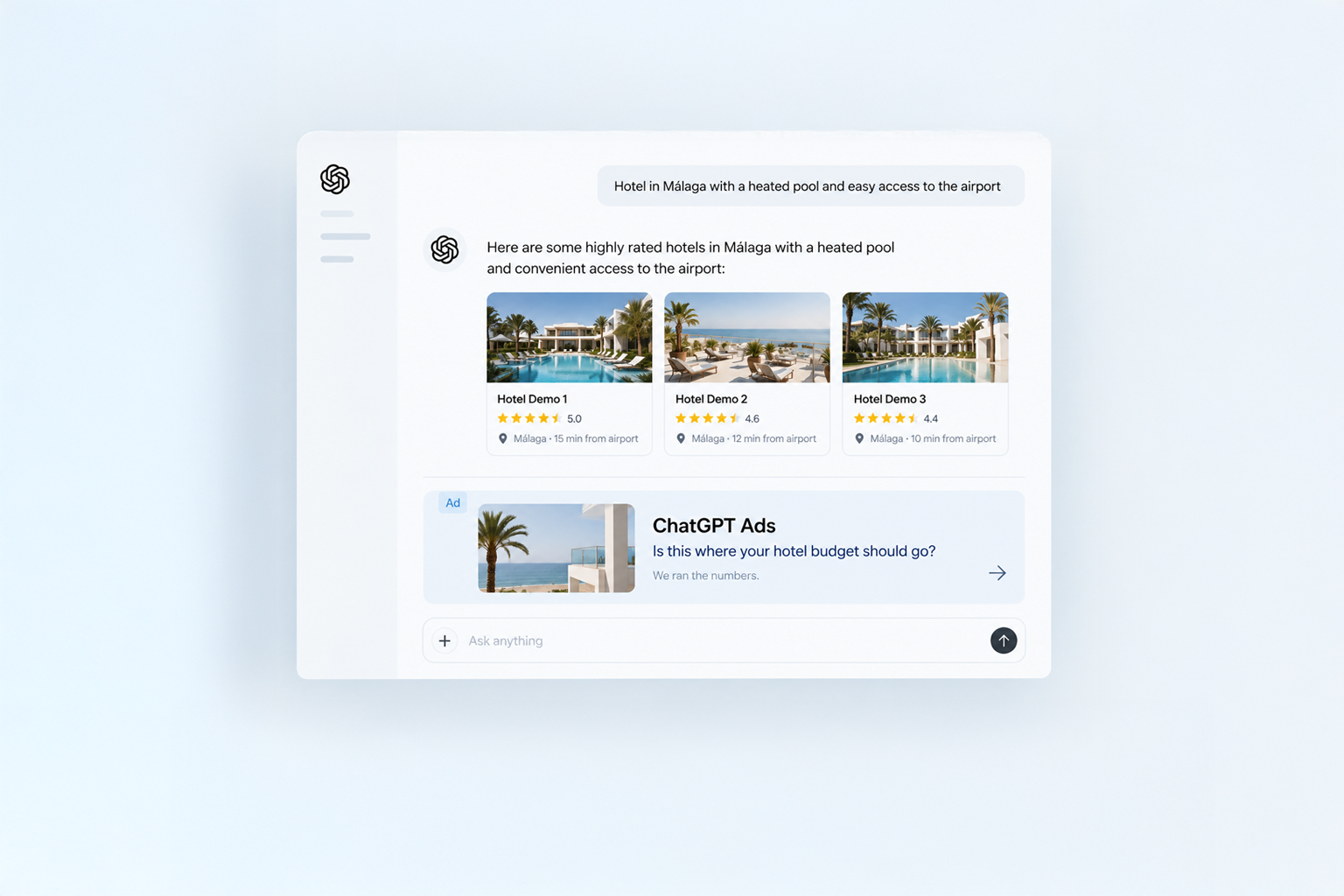
For large hotel chains, generating ads for Google Ads or Meta campaigns is a challenge of scale: multiple properties, markets, and languages. A process that could previously consume days of work—between briefing, copywriting, review, and uploading to the platform—is now resolved in minutes.
AI agents allow for the generation of copy variants adapted to each context with brand consistency, without the need for intensive manual reviews.
Scale is no longer a brake; it is an advantage.
One of the most profound changes AI is generating is the democratization of technical capability.
Until recently, any specific need—such as a custom dashboard, an automation, or an internal tool—depended on technical profiles. This implied wait times, work queues, and operational friction.
Today, marketing teams can build their own solutions. From analysis systems to alert scripts or content generators, response capacity has accelerated radically. And this has a direct impact on the hotelier: the time between detecting a problem and solving it has been reduced to a minimum.
This new paradigm does not just improve efficiency; it expands the reach.
On one hand, it allows for analysis with a level of detail previously unfeasible: precisely understanding why a campaign loses profitability in a specific market and acting accordingly.
On the other, it allows for scaling that same analysis to multiple accounts simultaneously.
Always with one key element: human judgment.
“What they do is free up that talent from the tasks that don't need it. AI executes, the professional decides,” points out Alfonso Cano, Head of Digital Marketing.
Repetitive tasks, redundant processes, and low-cognitive-value operations can be optimized and automated. And when that happens, the professional can focus on what really makes the difference: designing better strategies, strengthening the customer relationship, and elevating the quality of service.
Furthermore, scalability improves significantly. Teams that previously needed to grow in number to take on more accounts can now absorb a higher volume without losing quality.
One of the direct effects of gaining operational efficiency is the ability to broaden the strategic focus without needing more human resources. When the management of Meta Ads, Google Ads, and metasearch engines stops absorbing all the attention, space is freed up to work on the full funnel: from inspiration to conversion.
That space allows for the exploration of new channels, like TikTok or Pinterest, not because more resources are available, but because more quality time is available.
Alfonso notes that: “It is not about being everywhere. It is about being where it makes sense, without that implying an additional cost for the hotelier or an overload for the team.”
Audiovisual content has historically been one of the great limitations of hotel marketing: high costs, long lead times, and dependence on third parties.
Generative AI tools are changing that reality.
Starting from a static image, it is now possible to generate movement, adapt formats, create variations for testing, or scale creative production without the need for new sessions.
This directly impacts the entire funnel:
The result is a constant flow of content that is more agile, more adaptable, and without increasing production costs.
At Paraty Tech, artificial intelligence is not a trend or an experiment. It has been a way of operating for some time.
From the most granular analysis to optimization at scale, the goal is clear: that every euro invested by the hotelier is backed by the best possible analysis, in the shortest possible time, and with the greatest human weight in key decisions.
“The tools are better, and so is the strategic capability. And that combination is what positions us where we want to be: as developers of strategy and investment, not as platform managers,” concludes Alfonso Cano.
At Paraty Tech, artificial intelligence has not arrived to replace marketing. It has arrived to give marketers their time back.
From data to insight in minutes, not hours
One of the most tangible changes at Paraty Tech has to do with something very specific: the time spent working with data.
Processes that previously required hours—such as extracting information, structuring it, analyzing it, and presenting it—are now resolved in minutes. The automation of reports, account audits, and early warning systems has allowed for a reduction of nearly 80% in the operational time associated with these tasks.
What was once half a day's work is now resolved in minutes. And when multiplied by the volume of accounts managed by an agency like Paraty Digital Suite, this represents a structural change in the team's operational capacity.
But this is not just about efficiency; it is about decision-making speed.
An account manager who previously spent hours building a monthly report now accesses that same analysis in real-time, with a higher level of detail and personalization. And that recovered time translates directly into what really adds value: strategy, optimization, and decision-making.
Creating ads no longer takes days
For large hotel chains, generating ads for Google Ads or Meta campaigns is a challenge of scale: multiple properties, markets, and languages. A process that could previously consume days of work—between briefing, copywriting, review, and uploading to the platform—is now resolved in minutes.
AI agents allow for the generation of copy variants adapted to each context with brand consistency, without the need for intensive manual reviews.
Scale is no longer a brake; it is an advantage.
In-house tools, without depending on anyone
One of the most profound changes AI is generating is the democratization of technical capability.
Until recently, any specific need—such as a custom dashboard, an automation, or an internal tool—depended on technical profiles. This implied wait times, work queues, and operational friction.
Today, marketing teams can build their own solutions. From analysis systems to alert scripts or content generators, response capacity has accelerated radically. And this has a direct impact on the hotelier: the time between detecting a problem and solving it has been reduced to a minimum.
From extreme detail to a global vision
This new paradigm does not just improve efficiency; it expands the reach.
On one hand, it allows for analysis with a level of detail previously unfeasible: precisely understanding why a campaign loses profitability in a specific market and acting accordingly.
On the other, it allows for scaling that same analysis to multiple accounts simultaneously.
Always with one key element: human judgment.
“What they do is free up that talent from the tasks that don't need it. AI executes, the professional decides,” points out Alfonso Cano, Head of Digital Marketing.
Repetitive tasks, redundant processes, and low-cognitive-value operations can be optimized and automated. And when that happens, the professional can focus on what really makes the difference: designing better strategies, strengthening the customer relationship, and elevating the quality of service.
Furthermore, scalability improves significantly. Teams that previously needed to grow in number to take on more accounts can now absorb a higher volume without losing quality.
More reach, without more resources
One of the direct effects of gaining operational efficiency is the ability to broaden the strategic focus without needing more human resources. When the management of Meta Ads, Google Ads, and metasearch engines stops absorbing all the attention, space is freed up to work on the full funnel: from inspiration to conversion.
That space allows for the exploration of new channels, like TikTok or Pinterest, not because more resources are available, but because more quality time is available.
Alfonso notes that: “It is not about being everywhere. It is about being where it makes sense, without that implying an additional cost for the hotelier or an overload for the team.”
Audiovisual AI: continuous and autonomous creativity
Audiovisual content has historically been one of the great limitations of hotel marketing: high costs, long lead times, and dependence on third parties.
Generative AI tools are changing that reality.
Starting from a static image, it is now possible to generate movement, adapt formats, create variations for testing, or scale creative production without the need for new sessions.
This directly impacts the entire funnel:
- Awareness campaigns on social media
- Video ads on Meta or YouTube
- Dynamic creativity in Display
The result is a constant flow of content that is more agile, more adaptable, and without increasing production costs.
The future of hotel marketing
At Paraty Tech, artificial intelligence is not a trend or an experiment. It has been a way of operating for some time.
From the most granular analysis to optimization at scale, the goal is clear: that every euro invested by the hotelier is backed by the best possible analysis, in the shortest possible time, and with the greatest human weight in key decisions.
“The tools are better, and so is the strategic capability. And that combination is what positions us where we want to be: as developers of strategy and investment, not as platform managers,” concludes Alfonso Cano.