Search Console Now Shows You Whether Google’s AI Links to Your Hotel
Marketing 28/10/2026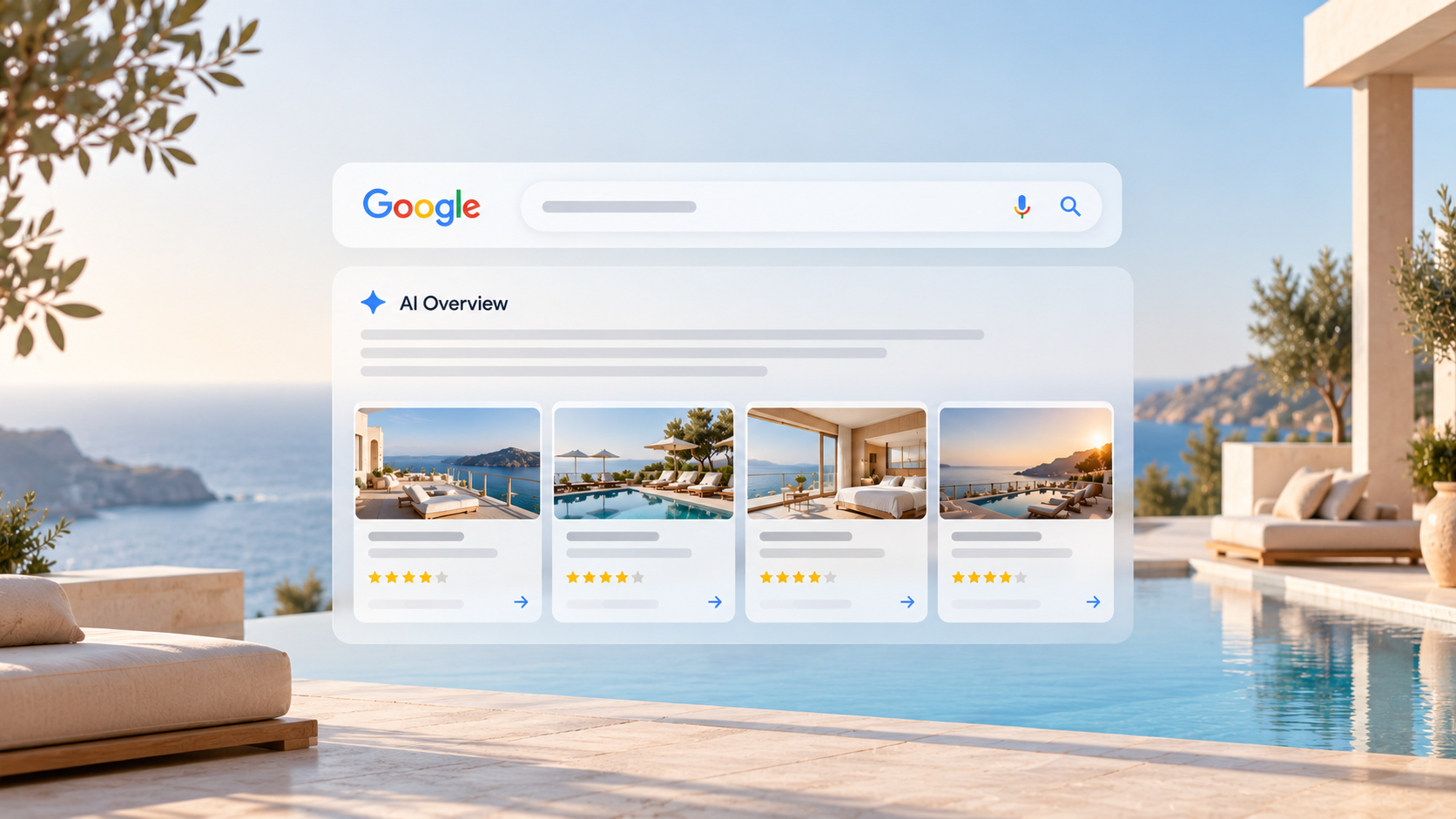
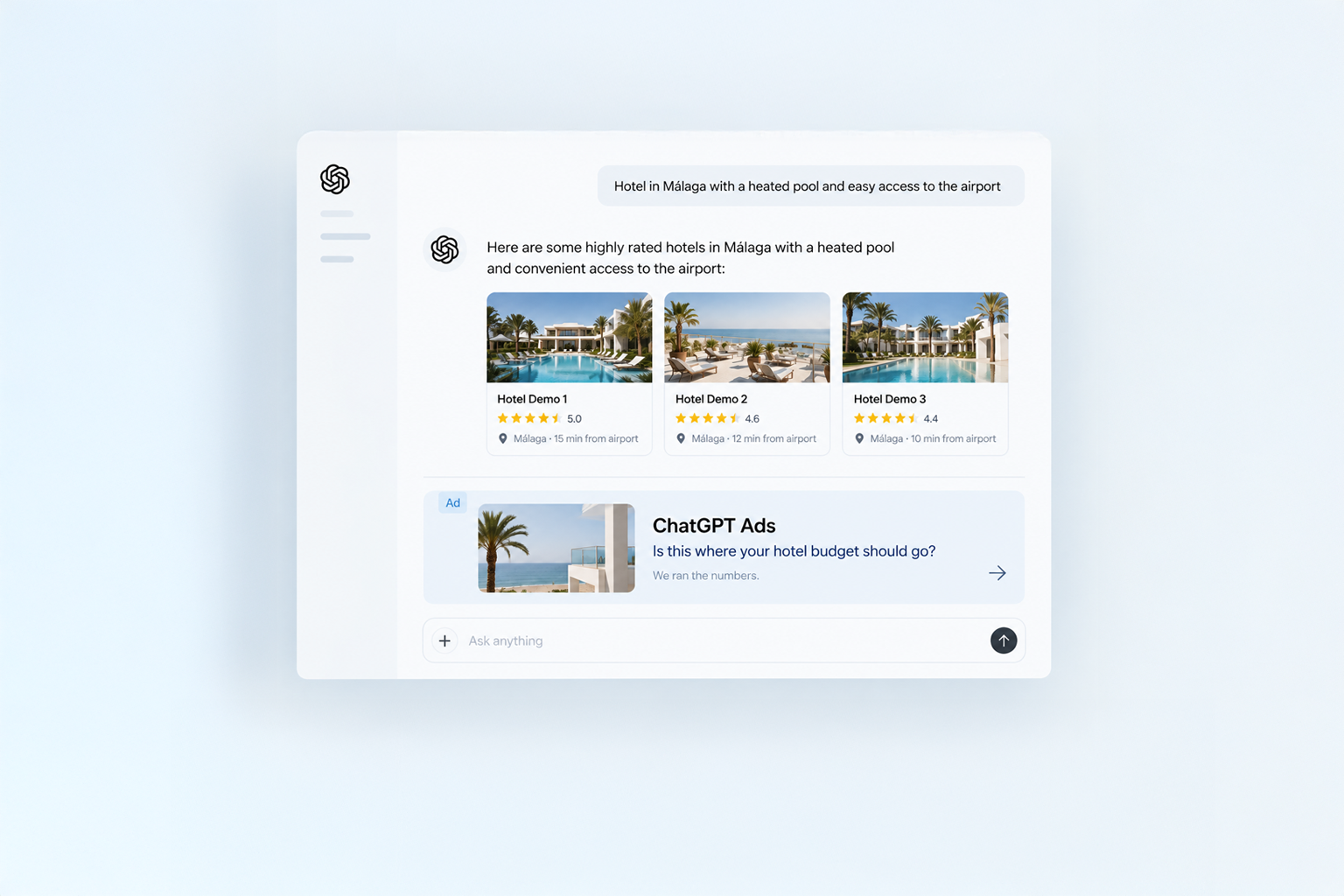
Travelers no longer scroll through ten pages of results to decide where to stay. They ask Google, receive an AI-generated answer, and begin making decisions based on it. If your hotel is linked in that answer, it makes their shortlist. If it is not, you are at a disadvantage before the comparison even begins.
Until a few months ago, measuring that presence was difficult. Not anymore. Google has expanded access to the Generative AI performance report in Search Console, which is still in beta. With it, you can begin to quantify your website's visibility across Google's AI-powered search experiences.
The report captures impressions across two Google search experiences:
An impression means that Google has displayed a link to your website. You can filter the data by page, country, device, and date. This shows you which content is gaining visibility and how its presence evolves over time.
It is important to note that the report focuses on the AI features built into Google Search. It does not capture appearances of your hotel in ChatGPT, Perplexity, Claude, or Copilot, nor queries made in the Gemini app. It also excludes Search Labs experiments and Google Discover.
If your website is already in Search Console and you have access to the report, there is nothing to install or configure. The data is located in the search results section, under generative AI. An initial review will give you a snapshot of your presence in this environment.
Data from the hotels we work with reveals patterns worth following. One hotel group we work with recorded 854,000 impressions across all of its websites over the past three months.
At the end of June, the group was recording 5,000 impressions per day. By September, that figure ranged from 10,000 to 14,000, with peaks mid-month. Growth of 100% to 180% in just one quarter.
The surprise lies in which pages are being linked. The group's homepage is not the page receiving the most impressions. Individual property pages hold a prominent position. One of its beach hotels has accumulated 47,500 impressions. One of its resorts, 34,735.
"What struck us most was not the volume, but where it lands. Google's AI does not just link to the brand; it links to the hotel. Each property page has become one of the key pages for building visibility," explains Abel Velasco, SEO Specialist at Paraty Tech.
The report reveals part of your AI visibility, but it still leaves out two key data points needed to interpret its impact:
For this reason, the data should be interpreted with caution. An increase in impressions is a signal of visibility. It is not direct proof of more qualified traffic or more direct bookings.
Even so, the report answers three essential questions: which pages appear, in which markets, and how their visibility evolves over time.
There is no formula that guarantees Google will recommend your hotel in its AI-generated answers. Nor is it enough to add an FAQ section and become fixated on structuring your data.
What you can do is make your pages accessible, understandable, and useful in answering what travelers need to know.
Content is essential. But how it is presented matters too. Your website architecture should make it easy for search systems to crawl your pages and understand the information they contain.
Would you like to know how often your hotel appears in Google's AI responses and which pages to prioritize? Our SEO team can help you interpret the data and identify opportunities for improvement.
AI has not changed what travelers want to know. It has changed how they find the answers. And your official website needs to be part of them.
Until a few months ago, measuring that presence was difficult. Not anymore. Google has expanded access to the Generative AI performance report in Search Console, which is still in beta. With it, you can begin to quantify your website's visibility across Google's AI-powered search experiences.
What the Report Measures
The report captures impressions across two Google search experiences:
- AI Overviews. AI-generated summaries that appear in search results.
- AI Mode. The conversational search experience that allows users to ask questions and explore answers in greater depth.
An impression means that Google has displayed a link to your website. You can filter the data by page, country, device, and date. This shows you which content is gaining visibility and how its presence evolves over time.
It is important to note that the report focuses on the AI features built into Google Search. It does not capture appearances of your hotel in ChatGPT, Perplexity, Claude, or Copilot, nor queries made in the Gemini app. It also excludes Search Labs experiments and Google Discover.
No Installation Required
If your website is already in Search Console and you have access to the report, there is nothing to install or configure. The data is located in the search results section, under generative AI. An initial review will give you a snapshot of your presence in this environment.
Nearly Three Times the Impressions in Three Months
Data from the hotels we work with reveals patterns worth following. One hotel group we work with recorded 854,000 impressions across all of its websites over the past three months.
At the end of June, the group was recording 5,000 impressions per day. By September, that figure ranged from 10,000 to 14,000, with peaks mid-month. Growth of 100% to 180% in just one quarter.
Daily impressions in Google's generative AI features
Websites of one hotel group · impressions per day
End of June
5,000
September (low)
10,000
September (high)
14,000
Source: Search Console Generative AI performance report for a hotel group that works with Paraty Tech. In September, daily impressions ranged from 10,000 to 14,000, with peaks mid-month.
"What struck us most was not the volume, but where it lands. Google's AI does not just link to the brand; it links to the hotel. Each property page has become one of the key pages for building visibility," explains Abel Velasco, SEO Specialist at Paraty Tech.
What the Report Does Not Yet Show
The report reveals part of your AI visibility, but it still leaves out two key data points needed to interpret its impact:
- It does not show clicks. You know how many times a link to your website was displayed, but not how many users reached it from an AI-generated answer.
- It does not identify queries. You can see which pages receive impressions, but not the exact question the traveler asked.
For this reason, the data should be interpreted with caution. An increase in impressions is a signal of visibility. It is not direct proof of more qualified traffic or more direct bookings.
Even so, the report answers three essential questions: which pages appear, in which markets, and how their visibility evolves over time.
Prepare Your Hotel for Google's AI
There is no formula that guarantees Google will recommend your hotel in its AI-generated answers. Nor is it enough to add an FAQ section and become fixated on structuring your data.
What you can do is make your pages accessible, understandable, and useful in answering what travelers need to know.
1. Provide Complete, Useful, and Consistent Information
- Answer guests' real questions. Detail amenities, hours, pet and cancellation policies, parking, accessibility, and distances to key points of interest. The more useful the information, the better travelers can assess whether your hotel matches what they are looking for.
- Keep information up to date. Hours, amenities, and conditions must reflect the reality of the hotel. An outdated page creates confusion and undermines the user experience.
- Ensure consistency across channels. Your name, address, phone number, and amenities should match across your official website, your Google Business Profile, and every other channel where the property is listed. Every discrepancy makes it harder for travelers to find reliable information.
- Reviews as a learning tool. Recurring questions, ratings, and comments tell you what information guests need and what should be explained more clearly on your website. Reviews provide context, but they do not, on their own, guarantee greater presence in AI responses.
2. Structure Your Website So AI Can Understand It
Content is essential. But how it is presented matters too. Your website architecture should make it easy for search systems to crawl your pages and understand the information they contain.
- Confirm that your website is eligible to appear in generative AI features. Review crawling, indexing, and any access restrictions. If a page is blocked or excluded from search, its ability to appear in these experiences will be limited.
- Make sure your content is crawlable. Key information must be available to crawlers. Do not rely solely on images, PDFs, or content that only renders after certain JavaScript executions.
- Treat each property individually. Avoid replicating a generic description across every hotel in the group. Each property page should explain what sets it apart, which amenities it offers, and which needs it meets.
- Include relevant FAQs. Answer common questions directly, such as: Are pets allowed? Is parking available? How far is the beach? Use natural language and avoid ambiguous answers.
- Use structured data where appropriate. Schema markup helps describe the property's entities and attributes, such as its address, location, and amenities. On its own, it does not guarantee greater visibility in AI responses, and it must reflect visible, accurate information.
- Review every language version. Translating the homepage is not enough. Property pages, amenities, and conditions must also be adapted for each language.
The Conversation Has Already Started
Would you like to know how often your hotel appears in Google's AI responses and which pages to prioritize? Our SEO team can help you interpret the data and identify opportunities for improvement.
AI has not changed what travelers want to know. It has changed how they find the answers. And your official website needs to be part of them.