Trivago as a Key Metasearch Platform: AI and an Optimized Hotel Profile Make the Difference
Marketing 13/08/2026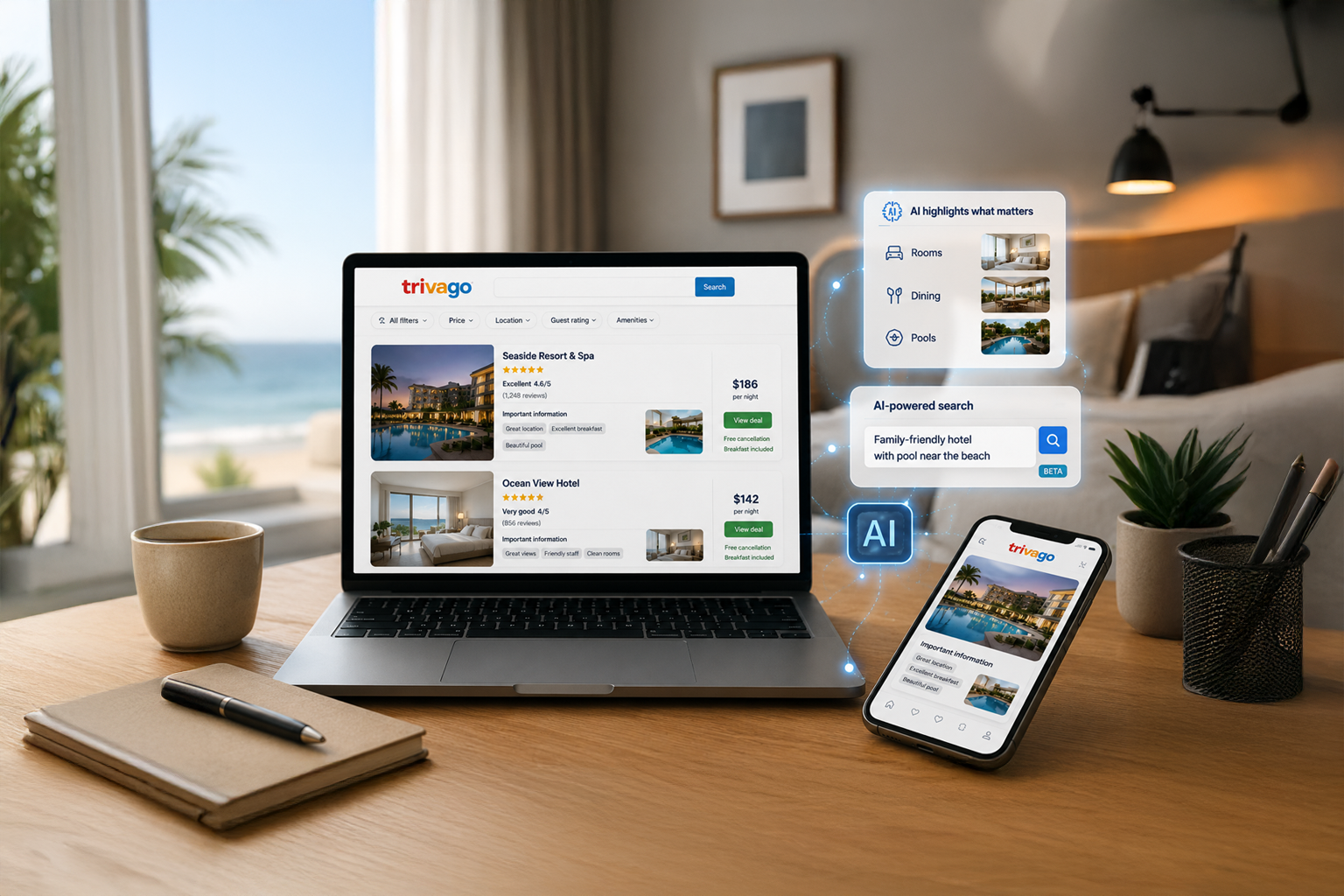
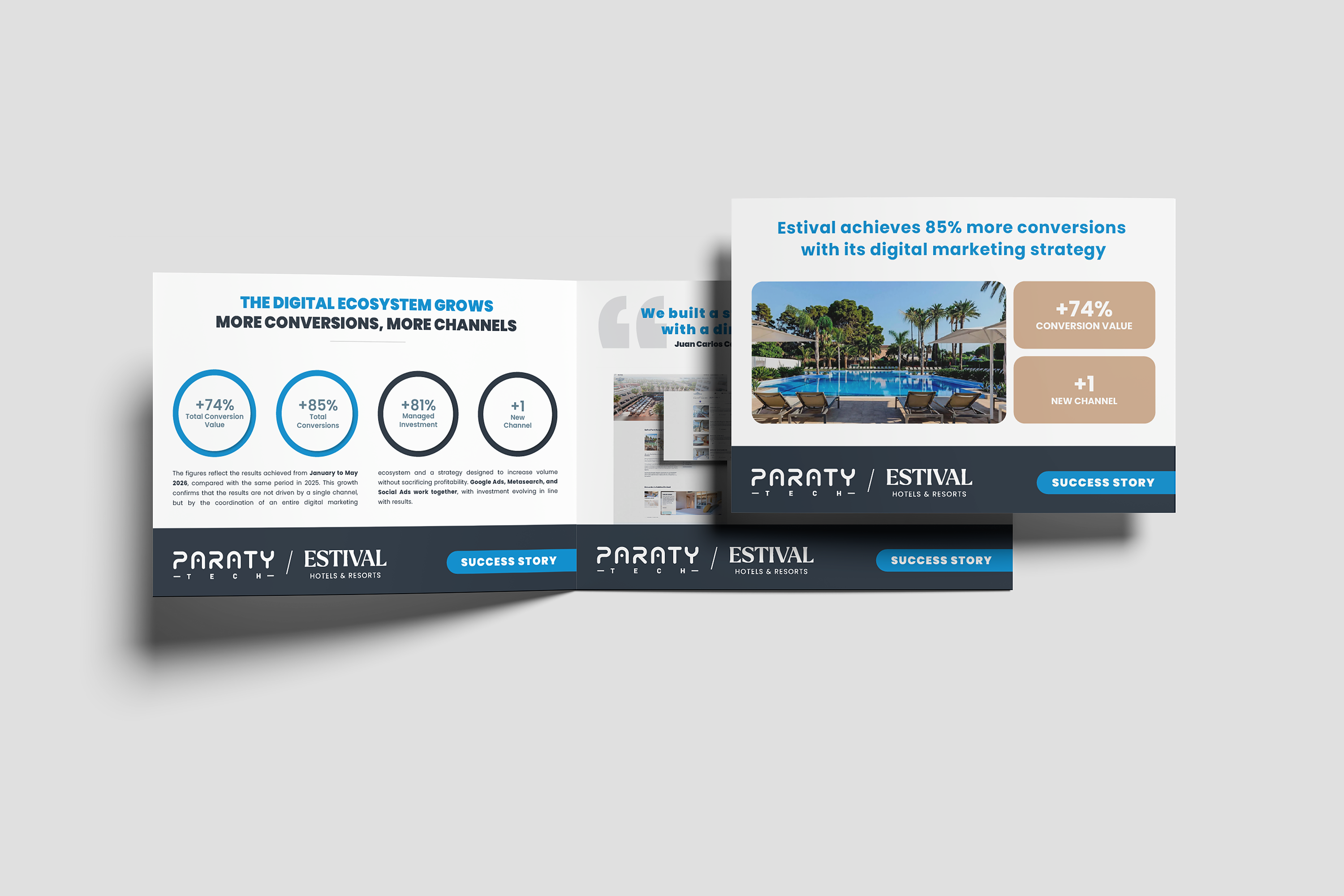
Trivago has just announced its sixth consecutive quarter of double-digit growth, with total revenue up 21% in Q2 2026 and a conversion rate that has improved by 64% since 2023. These figures confirm a trend that we at Paraty Tech have been seeing firsthand for months across the accounts we manage. And our own data, comparing 2026 with 2025, goes even further.

These are real performance figures from the properties managed by Paraty Tech that work with trivago. When comparing their performance in 2026 with the same period in 2025, the channel shows significant growth, directly reflecting how trivago is driving direct bookings when a hotel's profile is properly optimized.
One of the most significant changes in recent months has been trivago's shift from a cost-per-click (CPC) model to a cost-per-acquisition (CPA) model, with commissions starting at 10%. Although this change initially raised some concerns among hoteliers, in practice it offers several clear advantages:
Trivago is investing heavily in its own brand. Television advertising campaigns, a constant presence across media outlets, and an interface increasingly designed to make property comparison easier (prices, location, ratings, and amenities in a single view) are attracting more users to the channel and generating higher search volumes. On top of this, trivago is investing in AI, transforming both its internal operations and its product.
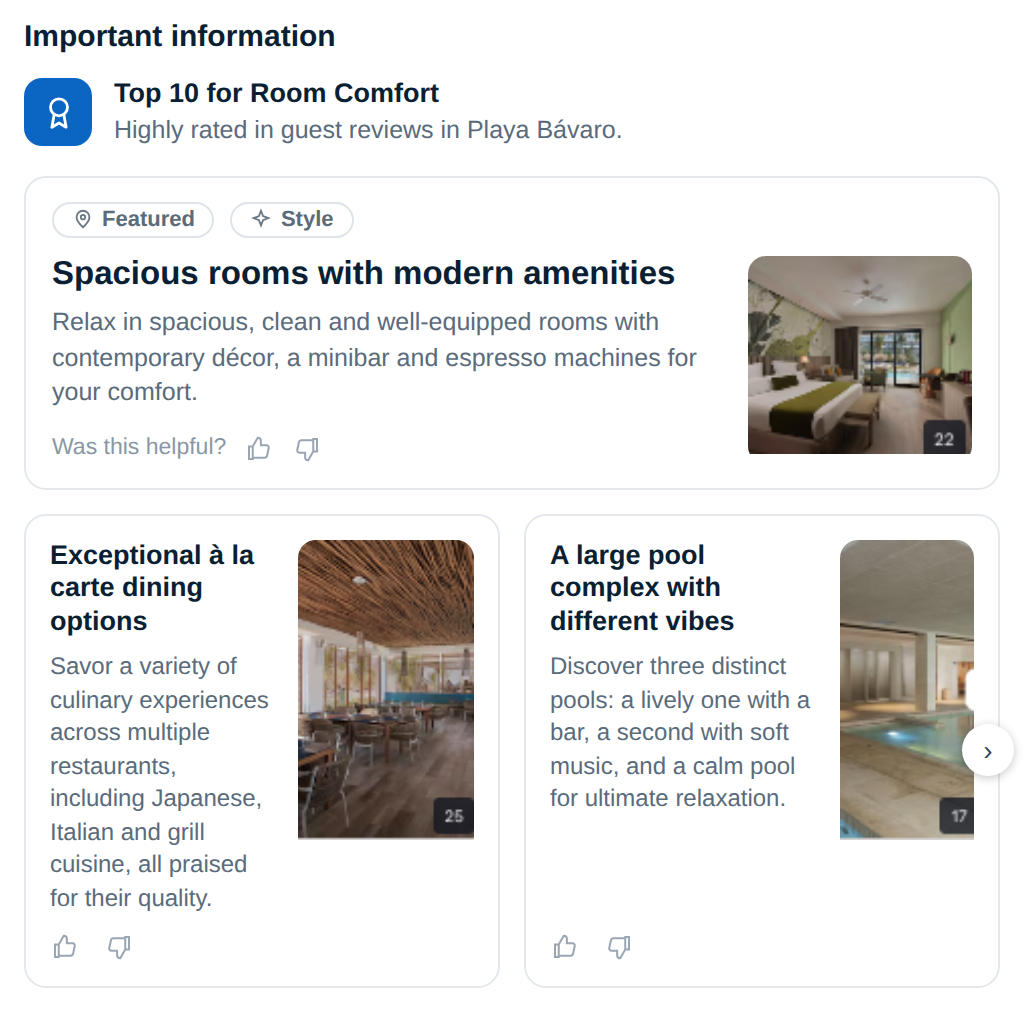
In this case, trivago's AI identifies the property's strengths based on guest feedback and pairs them with the most relevant photo for each category (rooms, dining, pools). This means that a hotel with well-tagged, up-to-date, and varied images by area has a much better chance of having AI build an appealing and credible visual profile. A profile with generic, limited, or outdated photos misses this opportunity, no matter how positive its actual guest reviews may be.

This feature points to a paradigm shift in hotel discovery: AI is no longer simply reading price or location filters; it is interpreting the user's overall intent and matching it against the content available on each property profile (location, amenities, reviews, photos, descriptions). As natural-language search becomes more widespread, hotels with rich descriptive and visual content will be more likely to appear in these conversational search results.
Against this backdrop of growth and increased investment in AI, these are the levers that make the difference between a property profile that is simply present on trivago and one that actually converts—and that AI can also make the most of:
Taken together, these optimizations do more than improve the experience for users browsing trivago: they directly feed the channel's AI systems, which increasingly rely on the quality and consistency of a property's profile to determine what to highlight, who to show it to, and which search results it should appear in.
At Paraty Tech, we closely monitor the evolution of trivago and other metasearch channels so our hotels are not only present, but their profiles are ready for the new AI-powered standard of hotel discovery.
Growth in numbers: what our own accounts show
These are real performance figures from the properties managed by Paraty Tech that work with trivago. When comparing their performance in 2026 with the same period in 2025, the channel shows significant growth, directly reflecting how trivago is driving direct bookings when a hotel's profile is properly optimized.
The bidding model shift: from CPC to CPA
One of the most significant changes in recent months has been trivago's shift from a cost-per-click (CPC) model to a cost-per-acquisition (CPA) model, with commissions starting at 10%. Although this change initially raised some concerns among hoteliers, in practice it offers several clear advantages:
- No investment risk: the hotel only pays when a confirmed and completed booking is generated, rather than for clicks that never convert.
- A profitable budget by design: without paying for traffic that does not generate results, the risk of spending on visits that do not translate into revenue is eliminated.
- Activation across all countries.
Why is trivago attracting more and more travelers?
Trivago is investing heavily in its own brand. Television advertising campaigns, a constant presence across media outlets, and an interface increasingly designed to make property comparison easier (prices, location, ratings, and amenities in a single view) are attracting more users to the channel and generating higher search volumes. On top of this, trivago is investing in AI, transforming both its internal operations and its product.
What's new at trivago: AI-powered property profiles and intelligent search in beta
Optimized property profiles: AI can “see” your images too
A clear example is the “Important Information” module that trivago automatically generates from guest reviews, combining them with the images available on the hotel's profile.In this case, trivago's AI identifies the property's strengths based on guest feedback and pairs them with the most relevant photo for each category (rooms, dining, pools). This means that a hotel with well-tagged, up-to-date, and varied images by area has a much better chance of having AI build an appealing and credible visual profile. A profile with generic, limited, or outdated photos misses this opportunity, no matter how positive its actual guest reviews may be.
Intelligent search: natural language reaches metasearch
Trivago is currently testing, in beta, an intelligent search feature that allows users to describe the type of property they are looking for in natural language, without relying solely on rigid filters.This feature points to a paradigm shift in hotel discovery: AI is no longer simply reading price or location filters; it is interpreting the user's overall intent and matching it against the content available on each property profile (location, amenities, reviews, photos, descriptions). As natural-language search becomes more widespread, hotels with rich descriptive and visual content will be more likely to appear in these conversational search results.
Recommendations for growing this channel
Against this backdrop of growth and increased investment in AI, these are the levers that make the difference between a property profile that is simply present on trivago and one that actually converts—and that AI can also make the most of:
- An optimized profile with high-quality images: current, well-lit, and varied photos of each area (rooms, restaurant, pools, common areas). Trivago's AI uses these images to automatically build the property's highlights, so a profile with generic or limited photos misses this opportunity even when guest reviews are strong.
- Rich, multilingual descriptive content: the more detailed and natural the hotel's description, the more information AI has to match your property with natural-language searches, such as those already enabled by the intelligent search feature in beta.
- Controlled rate disparities against OTAs: maintaining rate consistency across channels helps avoid visibility penalties and strengthens the algorithm's confidence in the hotel's profile.
- Maintaining strong overall ratings and reviews: trivago's AI builds a significant portion of its automatically generated highlights from guest reviews, so actively managing reviews directly feeds into this AI-generated content.
Taken together, these optimizations do more than improve the experience for users browsing trivago: they directly feed the channel's AI systems, which increasingly rely on the quality and consistency of a property's profile to determine what to highlight, who to show it to, and which search results it should appear in.
At Paraty Tech, we closely monitor the evolution of trivago and other metasearch channels so our hotels are not only present, but their profiles are ready for the new AI-powered standard of hotel discovery.